Adjusted Trial Balance
Content

The asset turnover ratio may in any given period be lower due to a purchase of assets. In simple terms, the asset turnover ratio means how much revenue you earn on the basis of the total assets you have. And this revenue figure would equate the sales figure in your Income Statement. The higher the number better would be the asset efficiency of the organization. It’s being seen that in the retail industry, this ratio is usually higher, i.e., more than 2. The higher your company’s asset turnover ratio, the more efficient it is at generating revenue from assets.

For example, retail businesses tend to have small asset bases but much higher sales volumes, so they’re likely to have a much higher asset turnover ratio. By the same token, real estate firms or construction businesses have large asset bases, meaning that they end up with a much lower asset turnover. For instance, a ratio of 1 means that the net sales of a company equals the average total assets for assets turnover ratio formula the year. In other words, the company is generating 1 dollar of sales for every dollar invested in assets. The key difference is that only long-term fixed assets (PP&E) are included in the calculation, as opposed to all assets. A key component of DuPont analysis is the asset turnover ratio, a system that began being used during the 1920s to evaluate divisional performance across a corporation.
Fixed Assets
There are several general rules that should be kept in mind when calculating asset turnover. First, asset turnover is meant to measure a company’s efficiency in using its assets. The higher the number, the better, although investors must be sure to compare a business to its industry.
If a business is in an industry where it’s not necessary to have large physical assets investments, FAT may give the wrong impression. This is the case since the amount of the fixed asset is not that big in the first place. That’s why it’s vital to use other indicators to have a more comprehensive view. It is an activity ratio that measures the efficiency with which assets are used by a company. It is computed by dividing net sales by average total assets for a given period. If the increase in profits is better than the cost of funds invested in the larger current assets levels, a lower operating assets turnover ratio may be justified.
What does an asset turnover of 1.5 mean?
If asset turnover ratio > 1
For example, let’s say the company belongs to a retail industry where the company keeps its total assets low. As a result, the average ratio is always over 2 for most of the companies. In that case, if this company has an asset turnover of 1.5, then this company isn’t doing well.
As a startup seeking early-stage investment, if your company has low revenue, venture capitalists will be taking a gamble on you. As with all financial ratios, a closer look is necessary to understand the company-specific factors that can impact the ratio.
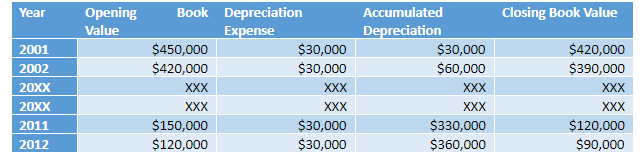
Straight Line Depreciation: How To Calculate It
Current assets are assets you expect will be converted to cash within a year’s time. These assets could include accounts receivable, inventory, or any other type of asset that is liquid—in this context, liquid refers to the ability to turn the asset into cash. Naturally, the higher the ratio, the more efficient and profitable a business is. As per the result of the calculation, the ratio is 50% and compare to the industry average, ABC is performing very well. Probably, for the better assessment, we need the ratio from the competitors as well as the last few years so that we could understand the trend. Net sales are usually the figure your company would report in your income statement.
Now that we know all the values, let us calculate the turnover ratio for both the companies. Average of Fixed assets have to be considered and not mere closing total assets. Net Sales refers to normal revenue that the company generates from its core operation. If you work on a service-based business, issue feedback forms, or contact your customers directly, to understand why they aren’t renewing—and adjust your offerings accordingly. Inventory management systemso you don’t lose track of your products due to damage, theft, or confusion. We would be able to say that P&G has to improve their asset utilization to increase the revenue generation through assets.
Inventory Turnover Equation
As expected, low margin companies would have higher asset turnover ratios since they have to offset lower profits with higher sales. Similarly, for highly capital-intensive industries such as petrochemicals, utilities, power, etc. the asset turnover ratios will be lower since their assets will be much higher.
- The asset turnover ratio may be artificially deflated when a company makes large asset purchases in anticipation of higher growth.
- By the same token, real estate firms or construction businesses have large asset bases, meaning that they end up with a much lower asset turnover.
- In other words, while the asset turnover ratio looks at all of the company’s assets, the fixed asset ratio only looks at the fixed assets.
- On the other hand, Company B is relatively more efficient since it is generating $2.8 per each dollar of Fixed Asset.
- Others, particularly that are service-based, will have a much lower ratio.
- This can result in a much higher turnover level, even if the company is no more profitable than its competitors.
The investor wants to know how well Sally uses her assets to produce sales, so he asks for her financial statements. Return on equity is a measure of financial performance calculated by dividing net income by shareholders’ equity. Return on average assets is an indicator used to assess the profitability of a firm’s assets, and it is most often used by banks. Divide total sales or revenue by the average value of the assets for the year. This metric helps investors understand how effectively companies are using their assets to generate sales. Peggy James is a CPA with over 9 years of experience in accounting and finance, including corporate, nonprofit, and personal finance environments. She most recently worked at Duke University and is the owner of Peggy James, CPA, PLLC, serving small businesses, nonprofits, solopreneurs, freelancers, and individuals.
Company
In other words, this would mean that the company generates 1 dollar of sales for every dollar the firm has invested in assets. Essentially, the net sales are primarily utilized for calculating the ratio returns and refunds. The returns and refunds should be withdrawn out of the total sales, in order to accurately measure a firm’s asset capability of generating sales. The Fixed asset turnover ratio is an activity ratio that helps in understanding the efficiency of the company in generating the revenue from its fixed assets. Hence while comparing asset turnover ratios for companies operating in the same industry this should be one of the factors that need to be taken into consideration. It should be noted that the asset turnover ratio formula does not look at how well a company is earning profits relative to assets.
DuPont Analysis Definition, Formula, & Equation – Investopedia
DuPont Analysis Definition, Formula, & Equation.
Posted: Mon, 27 Mar 2017 03:02:10 GMT [source]
The asset turnover ratio measures how efficiently a business uses their assets to create sales. Learn what this ratio measures and how the information calculated can help your business. If a company has an asset turnover ratio of 1, this implies that the net sales of the firm are the same as the average total assets for an entire year.
Calculating Total Asset Turnover For Your Business
When calculating and analyzing asset turnover ratio for your company, be sure you only compare results to those in similar industries. That means that for every dollar of assets Don’s business has, it’s only earning $0.68 in sales.
Asset Turnover Ratio can be defined as the value of sales generated for every rupee invested in assets for a given financial year. It is used to measure a firm's efficiency.
Formula of Asset TurnoverRatio
Asset Turnover Ratio = Total Sales / Averagehttps://t.co/12SxTIcyqb pic.twitter.com/7M99RA96K2— Sanjay Borad (@efinmgmt) August 12, 2021
You don’t want to be judging yourself on a metric you set yourself—especially when it’s one that’s meant to help you improve your business. In that case, if this company has an asset turnover of 1.5, then this company isn’t doing well. And the owner has to think about restructuring the company so that the company would be able to generate better revenues.
In other words, this ratio shows how efficiently a company can use its assets to generate sales. The asset turnover ratio measures the efficiency of a company’s assets to generate revenue or sales. The asset turnover ratio calculates the net sales as a percentage of its total assets.
Return on Total Assets (ROTA) Definition – Investopedia
Return on Total Assets (ROTA) Definition.
Posted: Sun, 26 Mar 2017 05:11:12 GMT [source]
Likewise, the type of company product also has implications for variations in the fixed asset turnover ratio. Note the difference between a manufacturing company and an internet service company. Manufacturing companies have fixed assets much higher than internet service companies. Thus, the fixed asset turnover ratio of manufacturing companies will be lower than for internet service companies. That may be because the company operates in a capital intensive industry, which has a significant proportion of fixed assets. Thus, capital-intensive industries often have low fixed asset turnover because they have a high percentage of fixed assets.
For the companies or entities that have a small number of assets like service providing companies, fixed assets turnover is not adding any value for your assessment. The numerator includes net sales i.e., sales less sales returns and discount. Average total assets are equal to total assets at the beginning of the period plus total assets at the ending of the period divided by two. Asset utilization ratios such as the asset turnover ratio can provide a lot of information about your business. If your results are on the low side, there are ways you can increase it, such as adding a new product line or service to your business, which can help drive sales up. What makes the asset turnover ratio of utmost importance is that it gives creditors and investors a general idea regarding how well a company is managed for producing sales and products. Thus, most analysts utilize this ratio before considering any investment, in order to make a sensible and informed decision.
- As everything has its good side and bad side, the asset turnover ratio has two things that make this ratio limited in scope.
- This is different from returns that require the buyer to return the product for full reimbursement.
- It’s important to note that asset turnover ratio can vary widely between different industries.
- A business that has net sales of $10,000,000 and total assets of $5,000,000 has a total asset turnover ratio of 2.0.
We look at companies in the retail sector and also a few prominent tech-based companies. Companies with a lower Fixed Asset turnover ratio are often faced with lower capacity utilization. A lower ratio may also indicate that the Fixed Assets of the company are not yet operational.
To reach this number, you’ll need two years of asset totals; you can find this information on your accounting balance sheet. Once you have your current year number and your previous number, add them up and divide them by two for the average.
What does it mean when a company reports ROA of 12 percent?
What does it mean when a company reports ROA of 12 percent? The company generates $12 in net income for every $100 invested in assets. The quick ratio provides a more reliable measure of liquidity that the current ratio especially when the company’s inventory takes a _ time to sell.
You may need to make new investments in order to raise your ratio, but depending on what you find, it could mean you need new sales processes or even a new product. Second, the higher a company’s asset turnover, the lower its profit margins tend to be . This is because many businesses adopt a low-margin, high-volume approach that can result in rapid growth and economies of scale. As we’ve previously discussed in many other articles, Wal-Mart is the quintessential example of this tactic.

Just-in-time inventory management, for instance, is a system whereby a firm receives inputs as close as possible to when they are actually needed. So, if a car assembly plant needs to install airbags, it does not keep a stock of airbags on its shelves, but receives them as those cars come onto the assembly line. Generally, a higher ratio is favored because it implies that the company is efficient in generating sales or revenues from its asset base. A lower ratio indicates that a company is not using its assets efficiently and may have internal problems. In theory and reality, your asset turnover ratio could improve while your sales volume is decreasing, so long as the value of your assets is decreasing faster. Unless you’re winding down a part of your business, decreasing asset values and sales volume is not a good sign.
Current asset turnover ratio – meaning and formula – Current asset turnover ratio – meaning and formula The current assets turnover ratio ascertains the efficiency with which current assets are used in a business. This ratio is strongly… https://t.co/iDBuu6iCaq
— AMIDU GODFREY EDSON (@AmiduEdson) August 18, 2020
Sometimes investors also want to see how companies use more specific assets like fixed assets and current assets. The fixed asset turnover ratio and the working capital ratio are turnover ratios similar to the asset turnover ratio that are often used to calculate the efficiency of theseassetclasses. The total asset turnover ratio compares the sales of a company to its asset base. The ratio measures the ability of an organization to efficiently produce sales, and is typically used by third parties to evaluate the operations of a business.
Author: Billie Anne Grigg
Related posts